

A Must-Read for Hong Kong Cat Owners: How to Choose the Best Natural Tofu Litter, Clumping Wood Litter, and Litter Box Setup for Your Furry Friend?
In the humid environment of Hong Kong with limited living space, choosing a truly effective cat litter requires more than just looking at the price; it is about odor absorption, moisture resistance, dust control, and compatibility with your home's litter box setup. This article consolidates various content topics from Forever Pets to help you clearly understand: how to choose tofu litter, whether wood litter strictly requires a double-layer box, what to note when switching litters, and which type of Cature cat litter suits your household best.
Table of Contents
- 1. Common Issues for Hong Kong Cat Households When Choosing Litter
- 2. What are the differences between Tofu Litter, Traditional Wood Litter, and Clumping Wood Litter?
- 3. Cature's 3 Key Recommendations: Tofu Litter + 2 Clumping Wood Litters
- 4. Further Reading: How 4 Related Articles Complement Each Other
- 5. FAQ: Litter Box Size, Litter Depth, and Transition Methods
1. Common Issues for Hong Kong Cat Households When Choosing Litter
Many households in Hong Kong have compact spaces, often placing the litter box in bathrooms, kitchen corners, or room nooks. If the cat litter lacks odor absorption, is prone to moisture, or produces excessive dust, the stress of odors and cleaning is quickly amplified.
Furthermore, many owners only focus on "is it tofu litter" or "is it wood litter" without considering the practical usage of each type. For example, some wood litters disintegrate into sawdust when wet and must be used with double-layer boxes, whereas clumping wood litters follow entirely different usage habits.
Therefore, choosing cat litter is not just about comparing prices; it is about considering your home's humidity, your cat's preference for texture, your willingness to change litter boxes, and how much time you want to spend on daily cleaning.
2. What are the differences between Tofu Litter, Traditional Wood Litter, and Clumping Wood Litter?
In terms of practical usage in Hong Kong, many owners eventually choose between "tofu litter" and "wood litter." However, despite both being called "wood litter," the usage methods can differ significantly, which is the most confusing point for beginners.
| Type | Key Characteristics | Pros | Things to Note | Suitable Households |
|---|---|---|---|---|
| Tofu Litter | Fast clumping, low dust, easy to clean | Easy for most owners to use, intuitive daily scooping; generally works with single-layer boxes | If moisture resistance is average, it may be more affected during Hong Kong's humid season | First-time cat owners, families wanting simple operations |
| Traditional Wood Litter | Turns into sawdust when wet | Natural wood scent, some owners prefer its moisture absorption | Usually requires a double-layer litter box; higher barrier to entry | Users already accustomed to double-layer systems |
| Clumping Wood Litter | Retains natural wood properties while forming clumps | Cleaning method closer to tofu litter; can be used in standard single-layer boxes | Still need to monitor odor absorption strength and cat acceptance | Families wanting to try wood litter without changing their entire system |
If you have always assumed that "wood litter = must use a double-layer box," you might be missing out on products truly worth trying. For many Hong Kong families, being able to switch to clumping wood litter without changing their existing single-layer box significantly lowers the barrier to entry.
3. Cature's 3 Key Recommendations: Tofu Litter + 2 Clumping Wood Litters
If you prefer to compare products within one brand, Cature’s product line is quite comprehensive. It offers not only the popular pea-based tofu litter but also two types of "clumping wood litter" that break traditional usage constraints—perfect for Hong Kong families looking to reduce humidity, odors, and cleaning hassles.

Cature High-Performance Antibacterial Pea Tofu Cat Litter
This is the top recommended choice for most Hong Kong households. Its core strength lies in the pea-based tofu litter’s inherent odor-absorbing performance, combined with vacuum-sealed packaging for easier storage and reduced moisture impact.
If your household frequently struggles with "humid weather making litter smell stronger," "inconvenient storage after opening," or "seeking the most reliable low-dust option for daily use," this is likely the perfect match.
Suitable for you if: You want easy cleaning, compatibility with single-layer boxes, and prioritize odor absorption and consistent overall performance.
View Pea Tofu Litter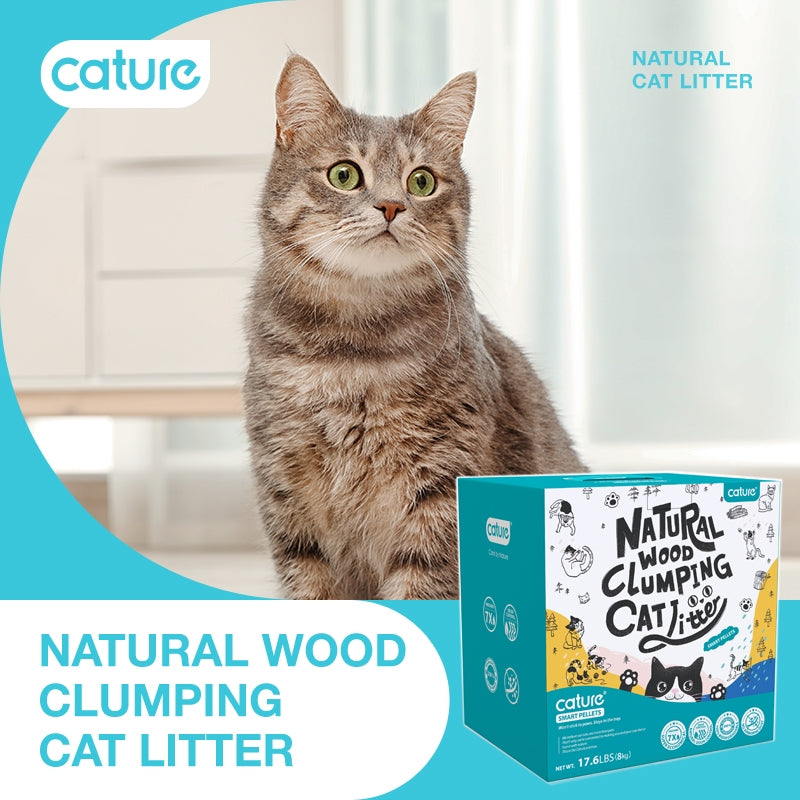
Cature Smart Pellet Natural Wood Clumping Litter (Green)
Many wood litters on the market disintegrate into sawdust when wet, which is why owners often associate wood litter with the need for double-layer boxes. However, this Smart Pellet is a clumping wood litter, with a usage logic distinct from traditional wood litters.
This means you don't have to replace your equipment just to try wood litter; you can operate it with a standard single-layer box, making it highly attractive for owners wanting to transition from tofu to wood without added complexity.
Suitable for you if: You prefer natural wood textures but want to avoid the hassle of a double-layer system.
View Green Clumping Wood Litter
Cature Odor Control Plus Antibacterial Wood Litter (Red)
If odor control is your top priority, this is an advanced choice among clumping wood litters. Like the green version, it is clumping-type, allowing you to continue using a standard single-layer box, making it much more direct than traditional disintegrating wood litters.
For multi-cat households, spaces with poor ventilation, or if you are specifically focused on odor management, this option is more targeted than simply seeking a natural wood experience.
Suitable for you if: Odor control is your number one priority, and you want to stick with a wood-based litter that is still easy to clean daily.
View Red Odor Control Wood Litter4. Further Reading: How 4 Related Articles Complement Each Other
This article serves as a core overview to help you quickly understand litter materials, usage, and purchase directions; if you have specific questions, the following 4 extended articles offer deeper insights. This reading path is ideal for Hong Kong owners to move step-by-step from "searching for problems" to "finding the solution that fits your cat."
1. How to Choose a Litter Box Size?
If your cat often kicks out litter, has an unnatural posture while using the toilet, or frequently urinates at the edges, the problem might not be the litter, but the size and design of the box.
Read: Litter Box Size Guide2. Tofu Litter Replacement Guide
If you have already purchased new litter but are worried your cat won't accept it, this article focuses on the practical steps for "switching" and common reasons for failure.
Read: Tofu Cat Litter Transition Guide3. How to Choose Cat Litter in Hong Kong’s Humid Weather?
If your goal is to solve issues during the rainy season or humid spring days, this article expands specifically on moisture and absorption needs.
Read: Cat Litter Recommendations for Humid HK Weather4. Comprehensive Tofu Litter Guide
If you are still learning the basics, such as the advantages of tofu litter and what kind of households it fits best, this serves as an introductory read.
Read: Comprehensive Tofu Litter Guide5. FAQ: Litter Box Size, Litter Depth, and Transition Methods
In Hong Kong's humid weather, what is most important to look for in cat litter?
Generally, prioritize odor absorption, moisture resistance, and ease of storage. For homes with smaller spaces, choosing a product that is easy to store and remains dry after opening significantly improves the overall experience.
Does wood litter strictly require a double-layer box?
No. Many traditional wood litters turn to sawdust and require a double-layer box; however, "clumping wood litter" acts more like tofu litter, allowing for use in standard single-layer boxes.
How deep should the litter be?
We generally suggest a depth of 4 to 6 cm. This supports effective clumping, better coverage, and reduced bottom sticking. If it's too thin, even high-performing litter can be misused.
How should I switch from my current litter to Cature?
We recommend a gradual transition; do not swap it all at once. Mix a small amount of the new litter with the old, letting your cat adapt to the new scent and texture, then slowly increase the proportion.
Should I start with tofu litter or try clumping wood litter directly?
If you want the most reliable and easiest entry point, start with tofu litter. If you are specifically interested in wood materials but don't want to change to a double-layer box, then clumping wood litter is the better direction to explore.
Want to find the right litter for your home faster?
Start by identifying your most common pain point: fear of humidity, odors, hassle, or wanting wood litter without the equipment change. Forever Pets has organized common paths to help you minimize mistakes and avoid repetitive trial-and-error.
This article was compiled by the Forever Pets team based on common cat-keeping environments in Hong Kong, product usage logic, and in-store experience, with the goal of helping owners efficiently find the right cat litter solution for their pets.