
ForeverPets.hk Pet Nutrition Education
| ForeverPets.hk Nutrition Content Team
When choosing dog food, don’t just look at whether “meat is the first ingredient.” From ingredient sources and ingredient splitting to nutritional adequacy, air-drying and slow-baking, this guide helps you build a more complete approach to choosing food.
Article Highlights
Don’t rely on the first ingredient alone
“Meat first” is useful information, but review it alongside the first few ingredients, nutrient analysis and your dog’s response.
Watch for ingredient splitting
Similar grains, legumes or starch sources may be listed separately; group similar sources together when reviewing a formula.
The best fit is the best choice
Age, activity level, body condition, taste and health status matter more than a single “high protein” number.
Rotate with a purpose
Protein rotation can be a dietary choice, but it is not a guarantee for preventing food sensitivities.
01 First understand your dog’s individual needs
There is no single dog food suitable for every dog. Before choosing food, start with your dog’s life stage, activity level, body-condition goals and health status.
Puppies / Growth stage
Puppies need nutrition that supports bones, muscles and overall development. Choose a formula clearly labelled for growth with the relevant nutritional-adequacy statement.
Adult dogs / Maintenance
Focus on maintaining an ideal body condition and everyday vitality. Review calorie density, protein sources, fat and whether the overall formula is balanced.
Senior dogs
Needs vary by breed, size, activity level and health status. If your dog has a long-term condition or special dietary needs, first review current symptoms and diet records.
Reminder: Every dog’s needs are different. Start by observing age, activity level, body condition, stool, appetite and skin condition. If your dog has a long-term or recurring health condition, seek veterinary assessment first before deciding whether a special diet is needed.
02 How to read a dog food ingredient list
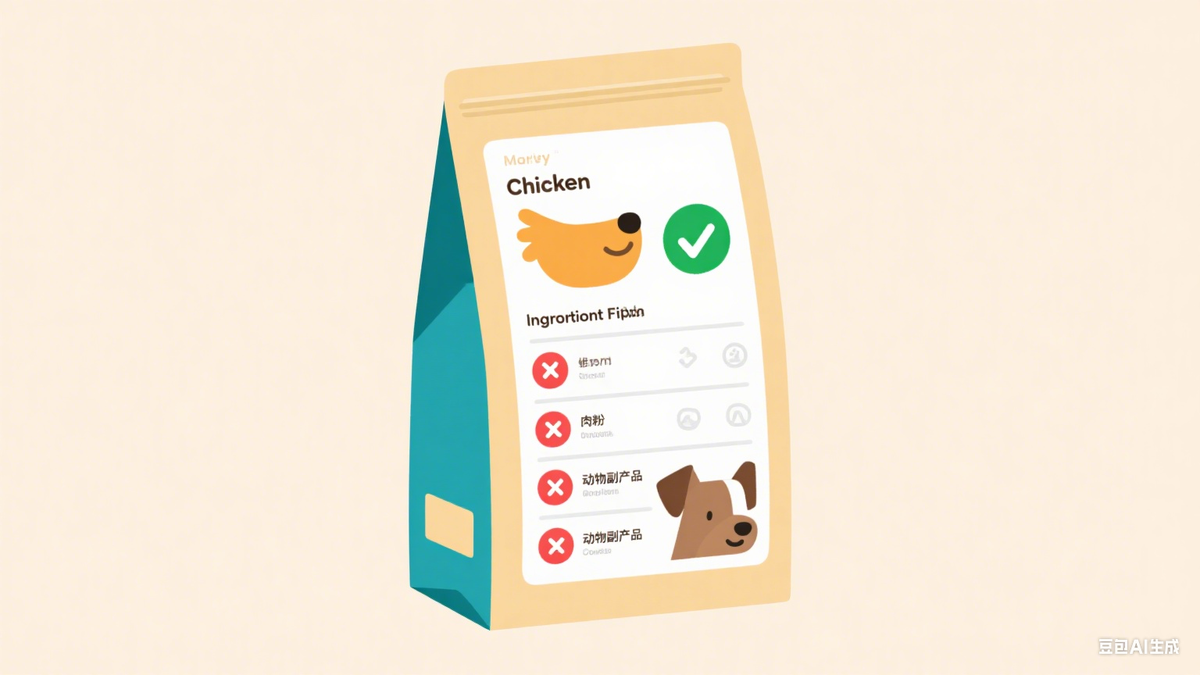
Dog food ingredient lists are usually arranged by weight from most to least, but they generally do not state the actual percentage of each ingredient. Therefore, “meat is the first ingredient” is useful information, but it is not enough to determine whether the whole formula suits your dog.
Review the first 5–8 ingredients
Do not look only at the first item. Pay attention to whether there are multiple similar grains, legumes, potatoes, starches or plant-protein sources.
Check protein sources
Clearly named chicken, beef, salmon and similar ingredients are easier to understand. For vague generic ingredients, ask the brand for clarification.
Check the nutritional-adequacy statement
“Complete and Balanced” should be paired with a clear suitable life stage, such as growth, adult maintenance or All Life Stages.
Do not equate it with hypoallergenic
Grain-free only means the food does not contain grains; it does not mean it cannot cause an adverse food reaction. If you suspect a sensitivity, start by recording diet and symptoms.
03 Ingredient splitting: Meat first does not always mean most meat
When choosing dog food, many people first ask: “Is the first ingredient meat?” But meat being first does not necessarily mean meat makes up the largest proportion of the whole food.
Ingredient splitting
Some formulas may list similar carbohydrate or plant-based ingredients under different names. Individually, each may rank after meat; combined, similar sources may total more than meat.
Rice examples
Rice bran, white rice, rice flour, brown rice
Legume examples
Peas, pea protein, pea fibre, pea starch
Potato examples
Potatoes, potato flour, potato protein
How can dog owners self-check?
✅ Review the first 5–8 ingredients
Do not look only at the first item; review the complete formula structure.
✅ Group similar sources
Combine and understand grains, legumes, potatoes, starches and protein powders.
✅ Pair with nutrient analysis
Review protein, fat, calories, life-stage statement and your dog’s actual response.
✅ Ask when in doubt
You can ask the brand or distributor about formula information, sourcing and nutritional-adequacy statements.
Key point: Meat as the first ingredient is a good start, but it is not the only standard for choosing food. A more complete approach is to review ingredient sources, the combined total of similar ingredients, nutrient analysis, calories and your dog’s response after eating.
Want to understand what each ingredient does?
Want to know what meat, organs, bone meal and fibre each do for dogs? Read:
Dog Food Ingredients Explained: What Do Meat, Organs, Bone Meal and Fibre Do for Dogs?
04 High protein does not always mean most suitable
“This food has high protein, so it must be good, right?” Not necessarily. Protein is important, but a dog’s needs are affected by age, size, activity level, body-condition goals and health status.
❌ Do not rely on
- Protein percentage alone
- Packaging words such as “natural” or “grain-free”
- A single ingredient ranking
- Online rankings or advertising
✅ Also review
- Whether protein sources are clear
- Fat and calorie density
- Whether the formula is complete and balanced
- Your dog’s stool, appetite, energy and body condition
Reminder: Different dog foods may have different moisture levels, so comparing protein percentages on packaging directly may not be fair. When choosing food, also review protein sources, fat, calorie density, feeding portions and your dog’s stool, body condition and energy after eating. If you want to adjust your dog’s diet according to its needs, feel free to discuss suitable options with ForeverPets.hk.
Is high-protein dog food always better?
Want to understand how protein sources, fat, calories and moisture affect the overall balance? Read:
Is High-Protein Dog Food Always Better? Understanding Protein Sources, Fat, Calories and Moisture
05 Air-dried, slow-baked and traditional kibble
Even though they are all dry food, different processing methods bring different textures, aromas, moisture and feeding experiences. No processing method is automatically best; the key is whether the formula is complete and balanced, and whether your dog accepts it.
Air-dried food
Moisture is gradually removed, creating a richer meat aroma and a chewy texture. Some air-dried foods are gently cooked before air-drying.
Slow-baked food
Baked for a longer period, kibble is usually crispier and may have a baked aroma.
Traditional kibble
Generally extruded at higher temperatures, convenient for storage, measuring and daily feeding; it is also the familiar daily main-food format for many families.
Key point: “Slow-baked” or “air-dried” does not mean “automatically healthier.” Choose based on your dog’s texture preferences, nutritional needs, feeding habits and actual response.
What’s the difference between air-dried, slow-baked and traditional kibble?
Want a complete comparison of moisture, shape, density and feeding guidance? Read:
Air-Dried vs Slow-Baked vs Extruded Dog Food: Moisture, Shape, Density and Feeding Guide
06 Does eating the same protein long term cause allergies? Understanding protein rotation
Many dog owners ask: “If my dog eats chicken, beef or fish long term, will it accumulate allergies?” There is no simple “yes” or “no” answer, but there is an important principle: protein rotation can be a dietary choice and is not a guarantee for preventing food sensitivities.
Protein rotation should be a purposeful choice
Do not frequently or suddenly change your dog’s food simply because you heard that “not rotating protein will cause sensitivity.”
Constantly rotating protein prevents food sensitivities
There is currently insufficient evidence to support that “frequently rotating protein sources” can prevent dogs from developing food sensitivities later. Frequent changes may also make it harder for owners to track which ingredient or formula is related to a reaction.
Understanding and recording matter more than blind rotation
Protein rotation can be planned according to your dog’s taste, formula selection, life stage or feeding goals. Each change should have a clear reason and be transitioned gradually while observing responses.
Want to change protein sources? Start with these four steps
- Record your dog’s current main food, treats, chews and commonly consumed protein sources.
- Confirm the purpose of the change: taste preference, formula needs, daily variety, or observing a specific reaction?
- Change only one main factor at a time and transition gradually.
- Observe stool, appetite, skin, ears, energy and body condition before deciding whether to continue feeding.
If you suspect a true food sensitivity, the approach is different
If your dog has persistent or recurring skin itching, ear problems, vomiting or diarrhoea, do not keep trying different meats on your own. Confirming a food sensitivity usually requires a systematic elimination diet and food challenge; during this period, avoid casually adding other treats, supplements or new proteins, as this can make reactions difficult to interpret.
Key point: It is not “always feeding one protein” that is best, nor is “more protein rotation” better. The most important thing is knowing what your dog is eating, what the purpose of each change is, and what the response is after eating.
07 Transition food gradually
Food transition is not “eating this food today and switching tomorrow.” A dog’s digestive system needs time to adapt to a new formula; suddenly changing the diet significantly can affect stool, appetite or digestive comfort.
Start with a small amount of new food
Gradually mix the new food into the existing food to avoid a sudden major dietary change.
Increase according to acceptance
If stool, appetite and energy remain stable, gradually increase the proportion of new food.
Continue observing responses
Watch stool, vomiting, skin, ears, appetite and energy status.
Slow down if problems occur
If there is only mild soft stool, slow the transition. If discomfort persists, pause the transition and seek veterinary help.
Record the diet
Record the current food, treats, transition dates, portions and your dog’s response to compare acceptance of different formulas.
Observe everyday condition
Watch stool, appetite, energy, body condition, skin and coat. For mild changes, slow the transition first.
Discuss when needed
Want to understand how to choose food based on your dog’s needs? Feel free to discuss nutrition consultation with ForeverPets.hk via WhatsApp.
Frequently asked questions
If dog food’s first ingredient is meat, does it definitely mean meat is the highest proportion?
Not necessarily. Ingredient lists are usually arranged by weight from most to least, but they generally do not state the actual percentage of each ingredient. Some formulas may list similar carbohydrate or plant-based ingredients separately; individual rankings may be lower, but combined totals may be higher than meat. Also review the first few ingredients, nutrient analysis, calories and your dog’s actual response.
What is dog food ingredient splitting?
Ingredient splitting refers to listing similar ingredients under different names, such as rice bran, white rice and rice flour, or peas, pea protein, pea fibre and pea starch. This labelling method does not necessarily mean the product is unhealthy, but it may make meat appear higher on the ingredient list. Dog owners should group and understand similar sources together.